Significance of Jaenamaz in Islamic Prayer
Prayer (Salah) is the foundation of Islam. Muslims perform it five times a day to connect with Allah. One important…
Choosing the right Quran is one of the most important decisions for any Muslim reader. Whether you’re a beginner learning to recite, a student perfecting your Tajweed, or someone who wants to understand the deeper meanings — the type of Quran you select can transform your spiritual journey.
Many people feel confused when they visit an Islamic bookstore or browse online. Should you buy a standard Quran without translation? Do you need color-coded Tajweed markings? Is an Urdu or English translation better for understanding? These questions are completely normal, and this guide will help you make the right choice based on your needs.
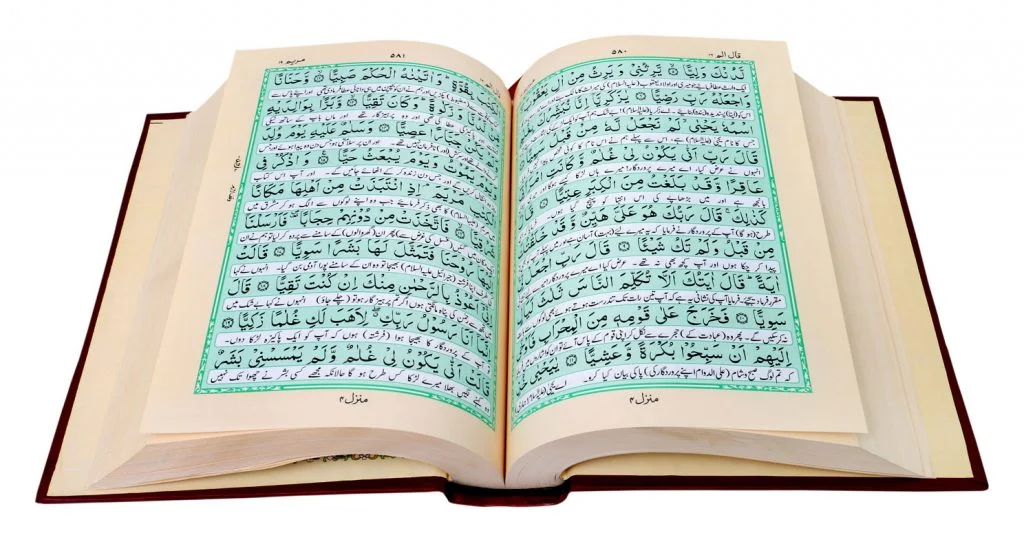
A standard Quran contains only the Arabic text of the Holy Quran without any translation or additional markings. This is the purest form — just the words of Allah as revealed to Prophet Muhammad (PBUH).
Standard Qurans work best for people who already know how to read Arabic fluently and understand the classical language. If you’ve memorized portions of the Quran or studied Arabic grammar, a Quran without translation gives you an uninterrupted reading experience.
Many huffaz (Quran memorizers) prefer standard Qurans because translations can sometimes distract from the memorization process. When you’re focusing purely on memorizing the Arabic words, having extra text on the page can break your concentration.
Standard Qurans come in various line formats — 10 lines, 13 lines, 15 lines, and 16 lines per page. The line count affects the size of the Arabic text and overall book dimensions.
A 15-line Quran is the most popular in Pakistan because it balances readability with portability. If you have weaker eyesight or prefer larger text, a big size Quran with fewer lines per page works better. For travel or carrying to the mosque, pocket-size Qurans offer convenience without compromising the complete text.
Reading a standard Quran helps you focus entirely on the Arabic pronunciation and rhythm. There’s something spiritually powerful about seeing only the divine words on each page — no human commentary, no linguistic barriers.
Standard Qurans also follow the traditional Uthmani script, which maintains the classical orthography used since the time of Hazrat Usman (RA). This script preserves the exact way the Quran was compiled by the companions of the Prophet (PBUH).
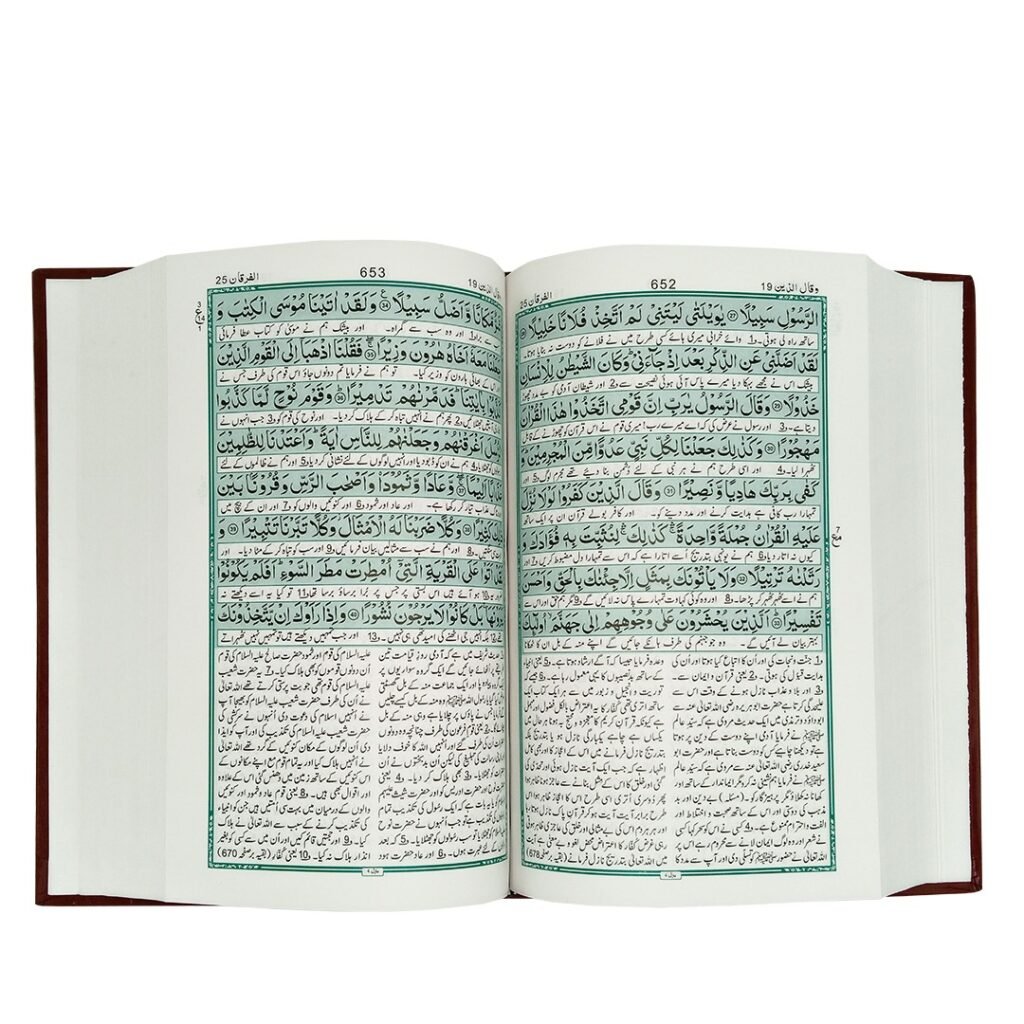
A Tajweed Quran uses color coding and special symbols to help readers apply the correct pronunciation rules while reciting. Tajweed means “to make better” — and these Qurans make your recitation better by highlighting where to apply specific rules.
Different colors indicate different Tajweed rules. For example, red might show where you need to apply Qalqalah (echoing sound), green could indicate Idgham (merging), and gray might mark silent letters. The exact color system varies between publishers, but most Tajweed Qurans include a guide page explaining what each color means.
Tajweed Qurans are perfect for students who are learning proper recitation rules. If you’re taking Quran classes with a teacher or using online tutorials, having the color-coded text helps you practice independently between lessons.
New Muslims who are learning to read Arabic also benefit greatly from Tajweed Qurans. The visual cues make it easier to remember which rules apply where, even if you haven’t memorized all the technical terminology yet.
Parents teaching their children Quran recitation find Tajweed Qurans extremely helpful. Kids respond well to colors, and the visual learning aspect makes Tajweed rules less intimidating and more engaging.
Like standard Qurans, Tajweed editions come in different line formats. The 15-line Tajweed Quran and 16-line Tajweed Quran are most common in Pakistan.
While incredibly useful for learning, Tajweed Qurans can become unnecessary once you’ve mastered the rules. Advanced reciters often return to standard Qurans because they no longer need the visual prompts.
Some people also find the colors distracting during deep spiritual reading or memorization. The colored text draws attention to technical rules rather than the meaning and message of the verses.
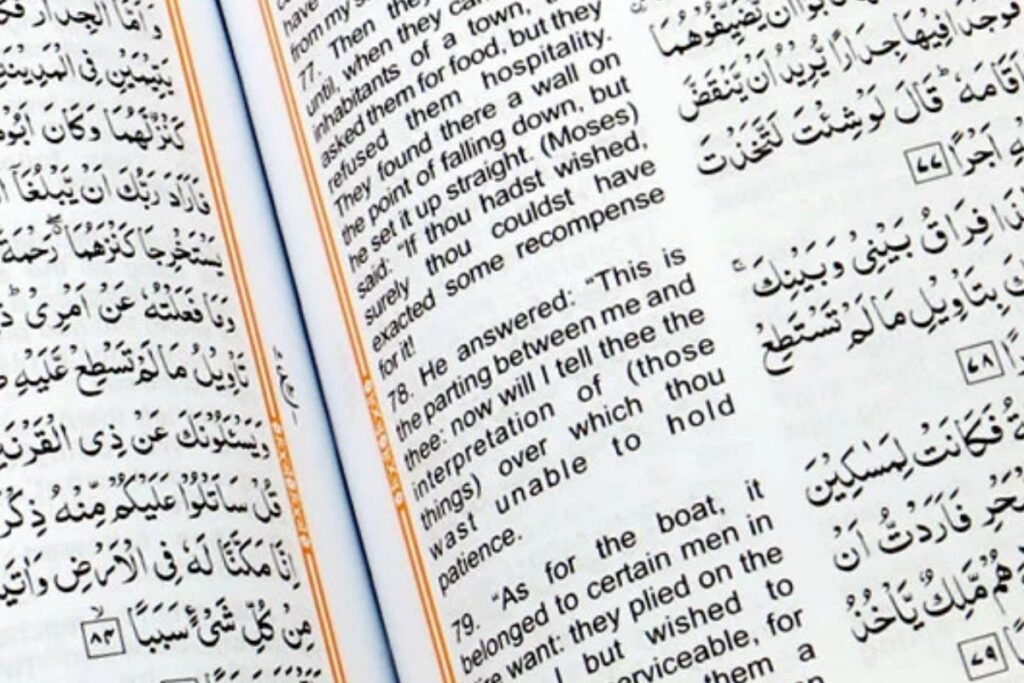
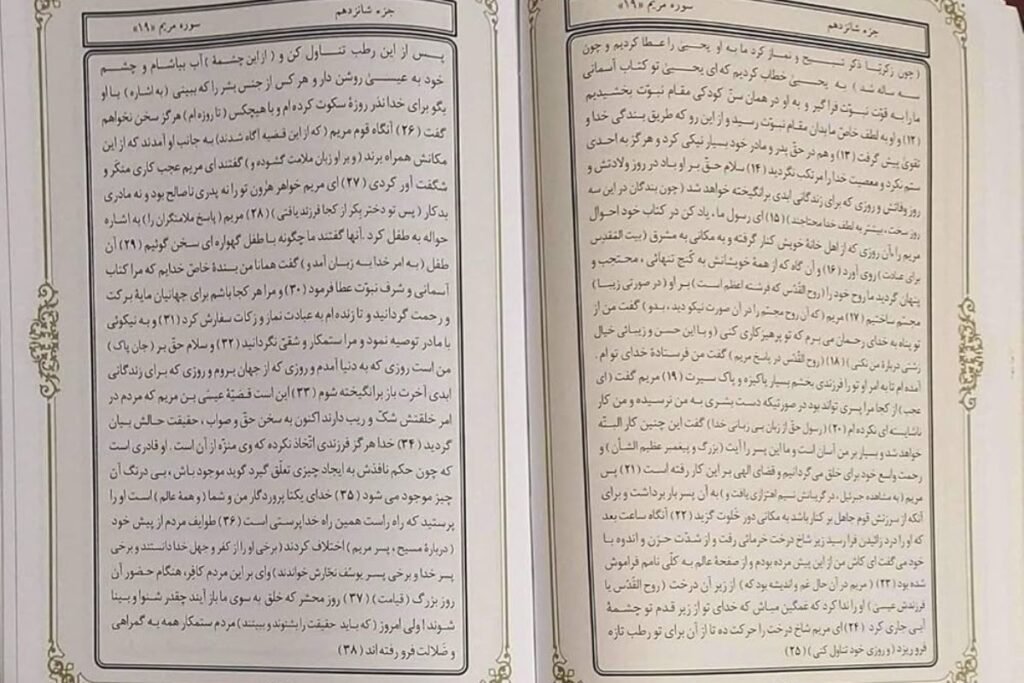
A translation Quran includes the Arabic text alongside a translation in another language — most commonly Urdu, English, or Persian for Pakistani readers. This allows you to read the Arabic and immediately understand what it means.
The Quran was revealed in Arabic, but not everyone speaks or understands classical Arabic. Translations bridge this gap, allowing Muslims worldwide to grasp the meanings, stories, commands, and wisdom contained in Allah’s words.
Reading a translation transforms your relationship with the Quran. Instead of just reciting words phonetically, you begin to understand the guidance Allah has provided for every aspect of life.
Different scholars have translated the Quran, and each brings their own linguistic style and interpretive approach. In Pakistan, several translations are widely respected:
Maulana Fateh Muhammad Jalandhri’s Urdu translation is extremely popular because of its clear, accessible language. This translation is taught in many madrasas and is trusted by scholars across Pakistan.
Maulana Ashraf Ali Thanvi’s translation includes brief footnotes explaining certain verses, making it helpful for deeper study.
Maulana Ahmed Raza Khan’s translation appeals to those following the Barelvi school of thought, with language that emphasizes reverence and devotion.
For readers who prefer English, Allama Abdullah Yusuf Ali’s translation is widely regarded as eloquent and scholarly. Marmaduke Pickthall’s English translation offers simpler, more straightforward language.
Anyone who wants to understand what they’re reading should use a translation Quran. This is especially important for new Muslims, reverts, or people who didn’t grow up in an Arabic-speaking environment.
Even if you can read Arabic fluently, classical Quranic Arabic differs significantly from modern spoken Arabic. A translation helps clarify meanings that might not be immediately obvious.
Parents raising children in Pakistan often keep both — a standard Quran for memorization and a Quran with Urdu translation for teaching meanings and lessons.
Your choice depends entirely on your current level and goals.
Choose a standard Quran without translation. Memorizers need to focus purely on the Arabic text without visual distractions. Stick to one specific line format (usually 15-line) throughout your memorization journey, as this helps with visual recall of page layouts.
Start with a color-coded Tajweed Quran. Practice with a teacher or online resource that explains the rules, then use the color coding to reinforce correct application. Once you’ve mastered Tajweed, you can transition to a standard Quran.
Get a translation Quran in your preferred language. Choose a translator whose style resonates with you — some are more literal, others more interpretive. Many people keep multiple translations to compare different scholarly perspectives on complex verses.
Consider owning multiple types. Use a translation Quran for daily reading and reflection, a standard Quran for pure recitation and prayer, and perhaps a Tafseer for deeper scholarly study of specific topics.
Beyond the main categories, think about practical factors when selecting your Quran.
Do you need a pocket-size Quran for travel and carrying to the mosque? Or a larger format for home reading with better visibility?
Some Qurans include features like individual Paras for targeted study, or complete Para sets for organized learning.
Invest in a well-made Quran that will last years. Quality binding, paper, and printing ensure your Quran remains readable and beautiful through regular use.
There’s no single “best” Quran for everyone — the right choice depends on your personal needs, Arabic proficiency, and spiritual goals. Many Muslims build a small library over time, using different Qurans for different purposes.
Start where you are. If you’re beginning your Quran journey, a translation helps you connect with meanings immediately. If you’re polishing your recitation, Tajweed color coding accelerates your learning. And when you’re ready for pure, uninterrupted engagement with Allah’s words, a standard Arabic Quran awaits.
Whatever you choose, the most important thing is that you actually open your Quran regularly, read with sincerity, and apply its guidance in your daily life. The format is just a tool — the transformation happens in your heart.